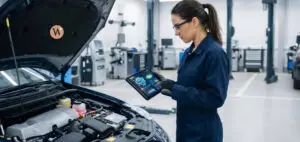

Powering Future Mobility
The move toward electric mobility is one of the biggest changes the auto world has faced in generations. Engines are giving way to batteries, and car buyers are asking questions they never had to ask before. A growing number of women automotive innovators are helping to answer them. Their work reaches from the factory floor to the planning office, and it is changing how the industry thinks about the road ahead.
A Turning Point for the Industry
Changes this large don’t come along often. When they do, they tend to open space for new people and new thinking. The shift away from fuel-burning engines forced carmakers to relearn much of what they knew, including how a vehicle should be powered and how it should be put together.
All that rebuilding created room at the table. Women who might once have been steered away from automotive careers found a field hungry for fresh skills. Many came in with backgrounds in chemistry or software rather than traditional mechanics, and those turned out to be exactly the skills electric vehicles needed.
Rethinking How Cars Are Built
Building an electric car isn’t the same as building a gas-powered one. Factories need different layouts and new ways to handle heavy battery packs safely. Even small improvements in production can lower costs, which makes these cars easier for ordinary families to afford.
Women automotive innovators working in manufacturing have brought fresh eyes to these problems. Some focus on making assembly lines safer for the people who work on them. Others look for ways to cut waste during production. This work rarely makes headlines, but the whole industry moves forward because of it.
Charging and the Everyday Driver
A car is only as useful as the network that supports it. Plenty of people hold off on buying an electric vehicle because they worry about where they will charge it. Easing that worry takes careful planning and real attention to how people actually live.
This is one area where women automotive innovators have left a clear mark. Their approach to charging design often puts safety and convenience near the top of the list. A charger tucked into a dark, empty corner may work perfectly well, but few drivers will feel comfortable using it at night. Paying attention to details like that helps more people feel ready to make the switch.
Making Batteries Cleaner and Smarter
Batteries are the heart of any electric vehicle, and they bring their own set of problems. Getting more life out of them is one. Figuring out what to do with them once they wear out is another, and it matters if electric mobility is going to live up to its promise.
Women automotive innovators are active on both fronts. Some study ways to stretch the range of each charge. Others look at what happens when a battery is no longer fit for the road, searching for ways to give it a second use or recover the materials inside. An electric car is only as green as the full cycle behind it, so this work counts for a lot.
Starting New Ventures
Not all progress comes from large carmakers. Smaller companies often move faster and are willing to take bigger risks. Many women have started their own businesses in this space, building software tools or parts that larger firms depend on.
Running a startup comes with its own hurdles, and finding investors is often the hardest of them. Funding hasn’t always flowed fairly to businesses led by women. Even so, women automotive innovators who take this route keep showing that good ideas can come from anywhere. Each success makes it a little easier for the next founder to be taken seriously.
Changing Workplace Culture
A company’s culture shapes who stays and who leaves. In an industry that men dominated for so long, some workplaces still feel unwelcoming to women, and that pushes away talent the industry badly needs.
When women automotive innovators move into leadership, they often push for changes that end up helping everyone. Fair hiring and flexible schedules are common starting points. People tend to do better work when they feel respected, and a healthier culture keeps skilled workers from walking out the door.
Building a Pipeline of Talent
Electric mobility will need far more skilled workers in the coming years. Meeting that need means drawing people from every part of society, not just the groups the industry has always leaned on.
Mentoring is one of the most useful tools for this. When women automotive innovators take time to guide students and early-career workers, they share practical advice that classrooms rarely cover. Partnerships between schools and companies can also give young women hands-on experience that makes the field feel real and within reach.
Looking Toward Future Mobility
The electric mobility revolution is still unfolding. Many of the hardest decisions about how cities and roads will work have yet to be made, and the people involved now will shape how the next generation gets around.
Women automotive innovators are firmly part of that effort. Their work is helping build a transportation system that runs cleaner and pays closer attention to the people who use it, and that future will be better for having their ideas in it.