
Prime Highlights
- Three female candidates for UN secretary-general called for stronger multilateralism, institutional reform and global cooperation.
- The contenders supported efforts to appoint the first woman to lead the United Nations.
Key Facts
- The debate featured Michelle Bachelet, Rebeca Grynspan and María Fernanda Espinosa, all candidates for the UN’s top post.
- The candidates emphasized climate action, AI governance, reduced bureaucracy and greater youth inclusion.
Background
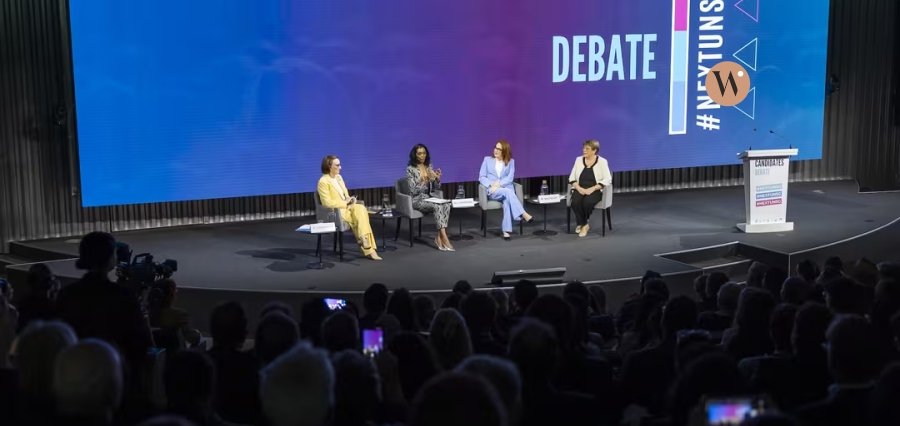
Three leading candidates for the next United Nations secretary-general used a public debate in Geneva to present their plans for strengthening the organization and restoring confidence in multilateral cooperation amid growing global challenges.
Former Chilean president Michelle Bachelet, UN Trade and Development Secretary-General Rebeca Grynspan of Costa Rica, and former UN General Assembly president María Fernanda Espinosa of Ecuador outlined their priorities before an audience of diplomats, students and UN officials.
The candidates argued that the UN must play a stronger role in addressing conflicts, climate change and declining trust in international institutions. Espinosa said the organization does not face a crisis of principles but rather a challenge in implementing agreed decisions. She stressed that the next secretary-general should focus on action rather than managing institutional decline.
Grynspan underlined the need for multilateralism in a highly fragmented world, while vowing to ensure that the organization became more prominent and effective. The Black Sea grain initiative was cited by her as proof of efficient international cooperation and stated that the UN should always be there where it is required.
Bachelet underlined the importance of courageous and independent leadership, which would encourage dialogue between states. She also called for science-based policymaking and a stronger UN role in regulating artificial intelligence.
The debate also renewed discussion about appointing the first woman to lead the United Nations. Since its creation 80 years ago, all 10 UN secretaries-general have been men. Bachelet said the organization should be led by a woman willing to speak openly on difficult issues.
All three candidates agreed on the need to reduce bureaucracy, improve climate financing mechanisms and make the UN more inclusive, particularly for younger generations.