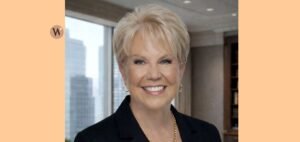
Some leaders subtly transform institutions from the inside out, while others are frontrunners who oversee them. Annemarie Murphy belongs to the second type. As Senior Executive Vice President and Chief Lending Officer at First Bank of the Lake, every day she brings to work something that most people in the finance industry hardly discuss: a sincere sense of obligation to the people who work alongside her.
She is not simply managing a lending portfolio. She is making calls that determine whether a family business survives its toughest year, whether a veteran entrepreneur finally gets the approval they have spent years working toward, and whether a small town gets the economic lift it has been waiting for. Annemarie Murphy understands the weight of that, and she has never once treated it lightly. For her, a loan approval is not a transaction. It is a turning point.
Courage Is Not the Absence of Fear
To her, courage means being afraid of the right things. She once believed daring credit decisions were the mark of a fearless leader. Over time, she learned that real courage often looks quieter. It is saying no to a deal that looks attractive but carries warning signs beneath it. It is holding firm on a conservative underwriting position when the pressure to grow is enormous. And it is speaking up for a borrower who does not fit the standard profile but represents exactly the community investment the bank was built to support.
First Bank of the Lake is a government-guaranteed lender with a mission Annemarie Murphy takes seriously: providing credit to small businesses that cannot access conventional financing on reasonable terms. The businesses she serves range from the smallest family operations to manufacturers employing hundreds of workers. Each one is a community. Serving that full range with the same discipline is what separates real leadership from cautious box-checking.
When Banks Rise, Communities Grow
Annemarie Murphy spends a lot of time thinking about something many in her industry avoid: the idea that financial performance and community impact cannot coexist. She believes that is one of the most damaging myths in modern banking, and she has built her entire leadership philosophy around proving otherwise.
Through SBA and USDA loan guarantee programs, First Bank of the Lake serves rural towns, mid-sized cities, coastal markets, and underserved communities nationwide. Its lending decisions land simultaneously in thousands of places where access to capital determines whether a business opens, grows, or closes. That reach demands deliberate leadership at every level.
One structural choice that reinforces this is the bank’s remote workforce model. Most employees live in the communities they serve, and Annemarie Murphy sees that as a competitive edge, not a logistics detail. When people understand the industries and local markets of the borrowers they work with, every decision they make gets better.
A Personal Promise to Those Who Served
Of all the work Annemarie Murphy is doing at First Bank of the Lake, the initiative closest to her heart is the bank’s growing commitment to lending to veteran business owners. For her, this is not a strategic priority; it is personal in the most direct way.
Annemarie Murphy comes from a military family with more than 260 years of combined service. Her father, husband, brother, nephew, and daughter have all worn uniforms. Service runs through every professional decision she makes. When she looks at veteran borrowers, she does not see a niche segment; she sees disciplined, mission-focused people with remarkable resilience. The data supports that: veterans are consistently among the strongest borrowers in the portfolio, and they represent every background and community in the country. Investing in veteran entrepreneurs, she says, is investing in America all at once.
Listening First, Deciding with Full Ownership
In high-pressure situations, Annemarie Murphy operates by one principle: she does not make significant decisions until she has heard every meaningful perspective. That means bringing the loan officer who knows the borrower best, the credit officer asking the toughest questions, and the colleague who watched a similar deal go wrong- all into the same conversation before a call is made.
Annemarie Murphy leads by consensus, not by a committee. A committee weakens responsibility and slows good thinking. Consensus means people feel genuinely heard before a decision is made, but the decision belongs to her. She carries the outcome in both directions. When something goes wrong, Annemarie Murphy looks for what she missed and carries that into the next call. That combination of decisiveness and full ownership is the foundation of executive judgment.
The Power of Admitting You Do Not Have All the Answers
Early in her career, Annemarie Murphy believed strong leaders always projected certainty. Doubt, she thought, was a weakness, especially as a woman in an industry that gave women less room to be human. She held that belief longer than she should have.
The shift came when she started letting her teams see the truth. Saying “I don’t know, but here is how we will figure it out” turned out to be one of the most powerful things she ever said. Annemarie’s teams became more open. Problems came to the surface faster. People started bringing her the real picture instead of the managed one.
But she is clear that vulnerability without accountability is just an excuse. When something goes wrong, her name always stays on it. Her team needs to know that when they bring their best work, she owns what follows. In a lending environment, that trust is not optional. It is the operating system.
Leading Through the Storm Without Losing People
The moments that have tested Annemarie Murphy most were not credit losses or difficult borrowers. They were the stretches of relentless change inside the federal programs the bank participates in. Policies shift. Guidelines get revised. Loan structures are redesigned with little warning. Teams that spent months building expertise around one set of rules are asked to start over, sometimes before the first rebuild is even complete.
Annemarie Murphy takes change fatigue seriously. When talented people start feeling like their expertise no longer matters, something breaks quietly inside a team. Her response is not to put on a confident face and push forward. She names the difficulty out loud, explains why the change matters, and brings the focus back to what stays constant: the mission, the standards, and the communities they serve.
Raising Leaders, Not Just Elevating Performers
Annemarie Murphy is candid about one of the most common mistakes in banking: promoting excellence without checking for readiness. She has made this mistake herself. The industry rewards top performers by moving them up- the star loan officer gets a management title; the exceptional underwriter leads a team. It feels like the right move. However, it often creates quiet damage.
The qualities that make someone outstanding as an individual contributor can work against them in leadership. When a new manager is struggling and their team can sense it, trust erodes in ways that take far longer to repair than anyone expects. Telling the difference between a great performer and a ready leader, she says, protects everyone involved.
A Legacy Built on Open Doors
When Annemarie Murphy imagines how her career will be remembered, she keeps coming back to one image: wider doors. She wants the through-line of her work to be the expansion of who got a real chance. Veteran entrepreneurs who had heard “no” everywhere else. Small business owners in communities that traditional lenders passed over. People who found a door where they expected a wall.
To the next generation of female executives, her advice is direct. Compensation matters; she does not romanticize that. But influence compounds in ways compensation never can. Be known for something specific. Build real relationships across every function and level. Speak early in rooms where it counts, because silence is never read as competence. And support the people coming up behind you, because the leaders who last are the ones known for making others better.
At its core, Annemarie’s vision of leadership is relational. She measures her success not by what she built for herself, but by the people whose confidence grew and whose futures changed because she showed up with integrity.