
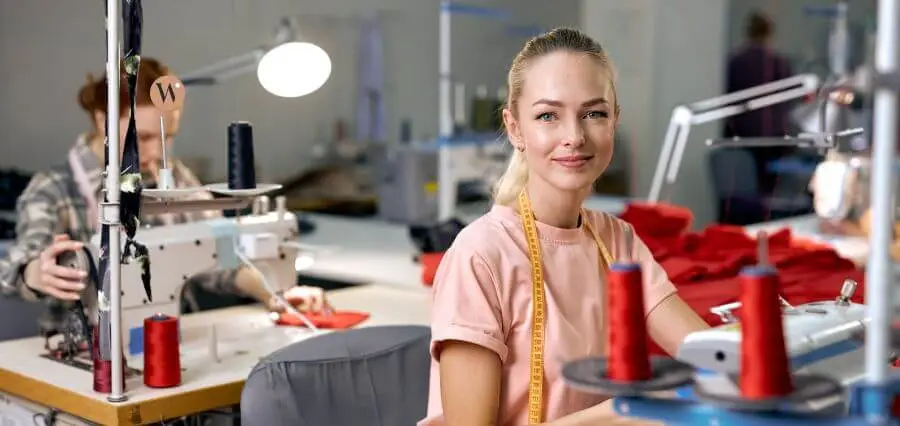
Advancing Women in Textiles
Most of the fabric people wear and use at home passes through hands that get little attention. A large share of those hands belong to women. Women in Textile Manufacturing work at spinning frames, looms, cutting tables, and sewing lines, and they check quality at nearly every step. The industry could not run without them, yet public talk about it rarely says so.
A History of Women’s Work in Textiles
Textile work began in households. Women spun and wove because cloth was needed and someone had to make it. When factories arrived, the work moved out of the home and the workers went with it. Wages gave many women a degree of independence they had not known before. They also meant long shifts, loud rooms, and little voice. Over the years, workers organized and asked for better terms. Much of what we now consider normal in a workplace, such as limits on hours and basic safety rules, came out of those efforts. The history of Women in Textile Manufacturing is partly a history of people insisting on fair treatment.
Recognizing Skills on the Factory Floor
This is careful work. A loose thread, an uneven seam, or a color that is slightly off can ruin a whole batch. Workers learn to spot these problems by sight and by touch, and that takes years of practice. Still, skill has not always led to advancement. Many experienced workers stay in the same job for a long time while decisions about planning and pay are made by others. Seeing Women in Textile Manufacturing as trained professionals, not simply extra hands, would change how companies hire, promote, and pay.
Creating More Opportunities for Leadership
Progress is real, but it is uneven. More women now supervise teams, manage plants, design products, and run their own firms. This matters because people who have worked on the floor know things that office plans often miss. They know which machine layouts cause strain and which targets are unrealistic.
Mentorship helps. A younger worker who has someone to ask for advice is more likely to stay and to try for a better position. Companies that offer this support usually keep their people longer.
Ensuring Workplace Safety, Respect, and Fair Pay
A workplace is not modern if its workers feel unsafe. Clean air, working exits, well-kept machines, and sensible hours should be standard. Respect is just as important. Every factory needs clear rules against harassment and a way for workers to report problems without fear of punishment. Fair pay completes the picture. When Women in Textile Manufacturing are paid honestly, the benefit reaches their families and the neighborhoods around them. Children stay in school longer, and local shops do better.
Family needs deserve attention too. Flexible schedules, childcare help, and fair leave policies let workers manage home and job together. These measures cost money up front. They tend to pay back through lower turnover and steadier work.
Expanding Access to Training and Education
Education opens doors. Courses in machine operation, quality control, design, and management let workers move up instead of staying where they began. Schools and industry groups can show young women that textiles can be a lasting career. Practical lessons in business and digital tools are especially useful.
Confidence matters as well. Many capable people stay quiet because nobody told them their ideas were welcome. A little encouragement from a manager can change that quickly.
Adapting to New Technology and Roles
Automation is changing how mills operate. Some workers fear that machines will replace them, and that worry is reasonable. New systems also create jobs that involve monitoring, planning, and solving problems. Women in Textile Manufacturing can fill these jobs if training reaches them early. When companies prepare their workers before new equipment arrives, change feels like an opportunity instead of a threat.
Sustainability is another growing area. Buyers want less waste, cleaner water use, and fewer harmful chemicals. Many women already lead efforts to reuse material and cut waste in their own plants and communities. Their practical knowledge will be useful as the industry becomes cleaner.
The Impact Beyond the Factory
When women earn steady pay and gain respect at work, the effects spread. Households become more secure. Girls see more options for their own lives. Wages are spent locally, which helps nearby businesses. Supporting Women in Textile Manufacturing is therefore a matter of fairness and also a sound economic choice.
Building a Better Future for Women in Textiles
The future of textiles depends on how the industry treats its people. For too long, workers were treated as interchangeable. That view is fading, and it should. A mill is only as good as the people who run it.
Fair pay, safe workplaces, open routes to leadership, and good training are the base of lasting growth, not optional extras. Employers, governments, and buyers all share responsibility for building that base. Women have helped shape this trade since its earliest days, and their role is still expanding. Those who invest in Women in Textile Manufacturing will find a workforce that is skilled and ready to lead.