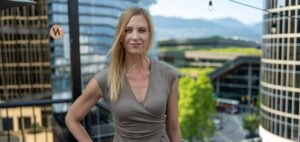
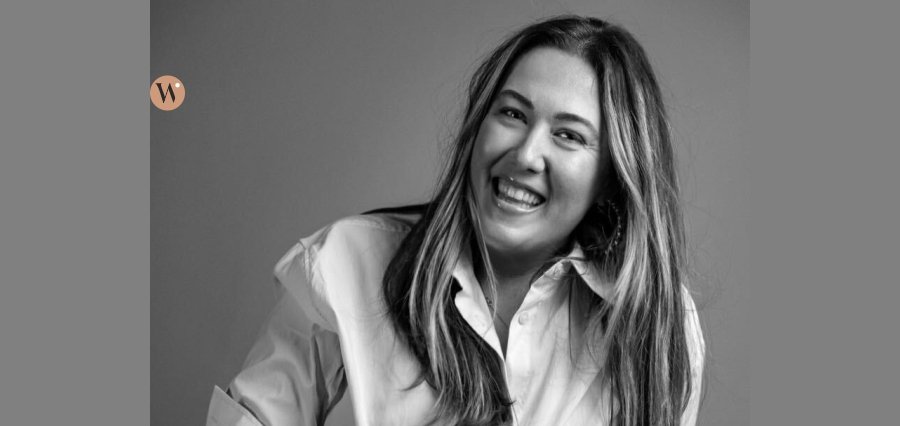
Emotional connections do not come from carefully planned actions. They emerge through spontaneous reactions that reveal genuine emotion. During weddings, while most attendees may be focused on watching the bride walk down the aisle, Marissa Kiersch watches the groom. She looks for the spontaneous reaction that occurs when the doors open and his expression fills with genuine wonder. Spontaneous reactions are an integral part of the human experience for her, and these are what make up the foundation of her work in the field of experiential marketing. She focuses on how people react to experiences that engage them emotionally.
This philosophy has been driving her projects for over twenty years. From the thrill of Comic-Con booths to designing experiential journeys that would give Disney fans the experience of living in the world of Pandora, she has always concentrated on creating experiences that could trigger real emotions. As the SVP & Head of Brand + Creative Strategy at 15|40 Productions, she knows that the best experiences are not just about being pretty but also about feeling something deep.
Building a Career in Live Production
Marissa did not begin her career in the creative and experiential industry. She started in corporate entertainment PR, expecting it to shape her professional future. That changed at Comic-Con, where she managed large crowds and demanding executives while coordinating complex logistics that had to appear seamless to the audience. In that fast-paced environment, she discovered what truly interested her. She enjoyed managing live experiences, anticipating challenges, and solving problems before they became visible. “I want people to experience a moment, not simply observe it,” she says.
Her creative instincts developed later and became a natural complement to her strong logistical skills. As Marissa moved further into experiential marketing, she found her strength at the intersection of strategy and creativity. This combination of structured thinking and creative problem-solving has continued to drive her throughout more than 18 years in a demanding industry.
Turning Experiences into Lasting Memories
When asked what has sustained her passion, Marissa returns to the wedding analogy. She believes that design, scale, and execution are important, but they have little value if the audience does not engage. The real measure of success is simple. Did people stop and take notice? Did the experience surprise them? Did they understand the story without needing an explanation?
The tools and techniques of the industry have changed significantly since she began her career. However, the core purpose remains the same. Create an experience that makes people feel something. “I look for the moment people genuinely want to remember,” she says. When that happens, the work has achieved its purpose.
Crafting Meaningful Experiences
Marissa’s philosophy has been shaped by work with a diverse range of clients, including Paramount+, ESPN, Hulu, Disney, and Nickelodeon. These campaigns taught her an important lesson. Beauty alone does not create meaning. Every project should begin with the audience, not the aesthetic. Her team considers what people already know, what they care about, and what can delight a dedicated fan without leaving a new audience member behind.
From there, the team looks for a strong creative hook. Sometimes it is a large physical statement. Other times, it is a subtle detail that only a true fan may notice. The most effective experiences often combine both. “I believe authenticity creates a stronger connection than budget,” she says.
Working across different industries has reinforced her belief that authenticity matters more than budget. A large investment can create spectacle, but spectacle without purpose is quickly forgotten. For Marissa, every creative decision should connect to the story and the people it is meant to reach.
Leading Growth with Purpose
For Marissa, the ability to connect different elements also shapes how she approaches her role at 15|40. In addition to leading Brand + Creative Strategy, she contributes to business development, marketing, and social strategy. These responsibilities could easily become separate roles. However, she sees them as different parts of the same process. The focus is always on understanding the goal and finding ways to make people care.
This approach gives her a broader perspective on every opportunity. She can assess whether an idea addresses the client’s business needs and what it communicates about the agency. For Marissa, growth is not about saying yes to every opportunity. It is about making thoughtful choices and taking on projects where the agency can deliver its strongest work.
Designing for Genuine Engagement
Few forces have transformed the industry as significantly as social media. Marissa has developed a clear perspective on how digital amplification should fit into the creative process. Today, almost every brief considers the guest journey, how the experience extends beyond the physical space, and how people will share it. These questions should be part of the creative process from the beginning.
However, there is a clear distinction between designing for amplification and designing solely for social media. Not every moment needs to be created to become shareable. An experience should earn the share by giving people a genuine reason to capture it. When a guest journey naturally leads to a memorable moment, the creative team can build around it. The person experiencing the moment should always remain the priority.
Audiences are too discerning to be impressed by a backdrop created only for a photograph. A stronger approach is to create something people genuinely want to capture and share. This could be an unexpected performance, a personalized reveal, or another moment that creates a lasting emotional response. When the guest journey is thoughtfully designed, social amplification follows naturally.
Beyond the Screen
At Disney’s Avatar Pavilion at D23, the team created the first version of the experience in 2024. The goal was to create more than a visually impressive space. They wanted to explore how far immersion could be taken within a convention environment. Every sense was considered. Guests were not only meant to see the world, but also hear it, touch it, discover it, and even experience its scent.
The world of Avatar already has a rich mythology. The challenge was not to compete with or recreate the original material. Instead, the team focused on its emotional core and translated that feeling into a physical experience. Much of the pavilion’s impact came from carefully layering different elements. The architecture created an immediate visual impression, while smaller details encouraged deeper exploration. A first-time visitor could understand the world at once, while dedicated fans could discover details that felt created especially for them.
Reading Cultural Shifts
Staying ahead of culture requires more than following trends. Marissa has developed a thoughtful approach based on observing behavior. She watches how technology and retail evolve in markets such as Asia, where new ideas often emerge before reaching the United States. Her focus is not simply on what these markets do differently, but on why audiences respond to those changes.
Social media also provides valuable insight. She follows platforms such as TikTok and Instagram to understand what people are engaging with. She sees social media as a window into changing behavior rather than a source of ideas to copy. Generational insight is equally important. Conversations with her nieces and nephews have become a valuable form of research. She notes that young audiences can quickly recognize when a brand experience feels forced. What appeals to them can also be very different from what resonates with an older audience.
Her curiosity also extends beyond the experiential industry. She looks to hospitality, fashion, theater, sports, retail, and architecture for inspiration. These industries can reveal changes in behavior that may not yet be visible within her own field. Trends can disappear quickly, but behavioral shifts often provide a clearer view of where culture is heading.
Rather than trying to predict the next major cultural moment, the goal is to remain curious and observant. This makes it easier to recognize change as it begins. It also helps brands enter cultural conversations in an authentic way instead of arriving after the moment has already passed.
Executing Creative Vision
Leading creative teams through ambitious and high-pressure projects has shaped Marissa’s management philosophy. She aims to create an environment where the first question is not, “Can we do this?” but “What would make this incredible?”
“I encourage teams to ask what could make an idea incredible,” she says. Budgets, permits, and other practical considerations will always become part of the discussion. However, introducing limitations too early can prevent a promising idea from developing. The focus should first be on understanding what makes an idea exciting. Production then plays an important role in turning that vision into something achievable while protecting its strongest elements.
For Marissa, the balance between ambition and execution is central to how 15|40 operates. The agency encourages its teams to think boldly, but it also expects them to bring those ideas to life. She believes constraints can often lead to smarter and more creative solutions than an unlimited budget.
Adapting Under Pressure
When asked to name a project where her team had to improvise under pressure, Marissa does not single out one example. In her experience, no live event ever unfolds exactly as planned. Weather can change. Talent schedules can shift. A venue can also behave differently on the day of the event than it did during planning. She believes this unpredictability is part of what makes the industry important. The job is to take an idea that may seem impossible on paper and turn it into reality. Most importantly, the audience should never see the challenges behind the scenes.
These recurring challenges have also shaped her approach to leadership. She believes having every answer is less important than staying calm and creating an environment where the best solution can come from anyone in the room. Panic does not solve problems, and neither does holding on too tightly to an original plan.
This mindset has influenced both her leadership style and creative philosophy. She believes in adapting when circumstances change, trusting the people around her, and being willing to let go of an idea when it no longer serves the experience. The audience never sees the original plan. They only see the final experience. What matters is making sure that experience works.
Confident and Inclusive Leadership
As a woman in a senior leadership role, Marissa has developed a clear philosophy about effective leadership. She believes leadership does not have to look or sound like the leaders who came before. Early in a career, it can be easy to assume that leadership has a specific style. With experience, she has learned that empathy, curiosity, and active listening are valuable leadership strengths. These qualities can work alongside decisiveness and high standards.
Her advice to women entering the industry is to understand the entire business. This means looking beyond the role they were hired to perform. They should understand budgets, creative work, and what drives an agency’s profitability. A broader understanding of the business can help them contribute with greater confidence and have a stronger voice in important discussions.
She also encourages women to speak up before they feel completely ready. Curiosity and a willingness to learn can be more valuable than being the loudest person in the room. Surrounding yourself with people who challenge your thinking can also help you grow as a leader.
The Future of Experiential Marketing
Looking ahead, Marissa expects experiential marketing to develop in two directions. It will become more technologically advanced while placing greater value on human connection. Advances in artificial intelligence will create new opportunities for personalization and responsive environments. These technologies could also allow experiences to continue beyond their physical spaces.
However, technology alone will not be the answer. As more of daily life moves online and AI makes digital content faster and easier to produce, genuine physical experiences may become even more valuable. They can offer a meaningful alternative in a world where almost everything is available instantly.
People still want reasons to come together. They want access, discovery, and a sense of community that scrolling through a social feed cannot provide. The industry is likely to move further away from passive experiences. Audiences will increasingly be invited to choose their own path and become part of the story.
For brands, this creates significant opportunities. However, success will require more than creating experiences designed to be shared online. The strongest brands will use technology to strengthen human connection rather than replace it.
After more than 18 years in the industry, this balance between innovation and human connection remains what excites Marissa most about her work. The tools continue to evolve. The scale continues to change. Audience expectations continue to grow. Yet the core purpose remains fundamentally human: create something that makes people feel something. When an experience achieves that, people remember it. “I know the experience works when people feel something and remember it,” she says.